
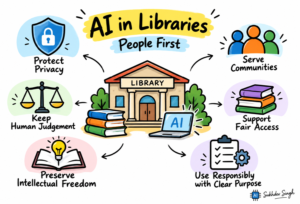
*AI in Libraries: Progress Must Begin with People, Not Technology*
Artificial intelligence is finding its way into libraries, from information discovery and cataloguing to reference services, accessibility and everyday administrative work. But an important question remains: *Should libraries adopt AI simply because it is available, or because it genuinely serves their communities?*
The American Library Association (ALA), through its *Guidance on the Use of Artificial Intelligence in Libraries*, offers a thoughtful perspective on this question.
What stands out to me is its emphasis on values rather than technology alone.
A library is not merely a place where information is stored and retrieved. It is also a space where people exercise their freedom to read, explore ideas, ask questions and learn without fear of unnecessary surveillance.
As libraries consider AI, a few principles deserve particular attention:
• *Privacy must come first.* Readers’ borrowing histories, research questions and personal information should not be exposed to AI systems without appropriate safeguards.
• *Human judgement must remain central.* AI can assist with routine tasks, but professional expertise, contextual understanding and accountability cannot simply be handed over to an algorithm.
• *Access must be fair.* AI systems should not deepen existing inequalities or disadvantage people because of their language, background, disability or level of digital literacy.
• *Intellectual freedom must be protected.* Automated recommendations and search rankings should not quietly restrict the diversity of ideas and perspectives available to readers.
• *Staff and communities must have a voice.* Decisions about AI adoption should involve the people whose work, access to information and trust may be affected.
There is another point worth reflecting on: *Choosing not to adopt an AI tool can be just as responsible as choosing to use one.*
Technology adoption should never become a race to keep up. Libraries need clear public-service objectives, careful evaluation, transparent policies and meaningful human oversight before introducing AI into their services.
For libraries in India, these questions are equally relevant. Our linguistic diversity, differences in digital access and the varying needs of our communities make thoughtful, locally appropriate implementation especially important.
The real measure of AI in libraries will not be how many tasks it automates, but whether it helps people access reliable information while preserving their privacy, dignity and freedom of thought.
*The goal should be simple: let technology assist the library’s mission, not redefine it.*
I recommend reading the ALA guidance for anyone working in libraries, information science, digital literacy or educational technology.
Read the full guidance here: www.ala.org/tools/standards-and-guidelines/guidance-use-artificial-intelligence-libraries