
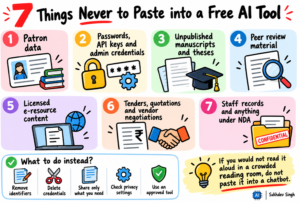
Pasting text into a chatbot takes a second. Undoing a data leak can take much longer.
Library professionals regularly handle confidential information. Here are seven things to keep out of unapproved AI tools.
*1. Patron data* — Names, membership numbers, email IDs and borrowing history.
*2. Passwords and API keys* — Check Koha, DSpace and other configuration files for credentials before sharing them.
*3. Unpublished manuscripts and theses* — Do not share someone else’s research without proper permission.
*4. Peer-review documents* — Reviewer reports and manuscripts may be protected by journal confidentiality rules.
*5. Licensed e-resources* — Check database and e-book licence terms before uploading full text.
*6. Tenders and vendor quotations* — Protect confidential pricing, procurement documents and ongoing negotiations.
*7. Staff records and NDA-protected documents* — Appraisals, grievances and disciplinary matters need careful handling.
*What should you do instead?*
– Replace names with placeholders. – Remove IDs, passwords and access tokens. – Share only the relevant extract. – Check your AI tool’s privacy, training and data-retention settings. – Use an institution-approved tool for sensitive work.
*Remember:* If you would not read it aloud in a crowded reading room, think twice before pasting it into a chatbot.
Share this checklist with your library team.